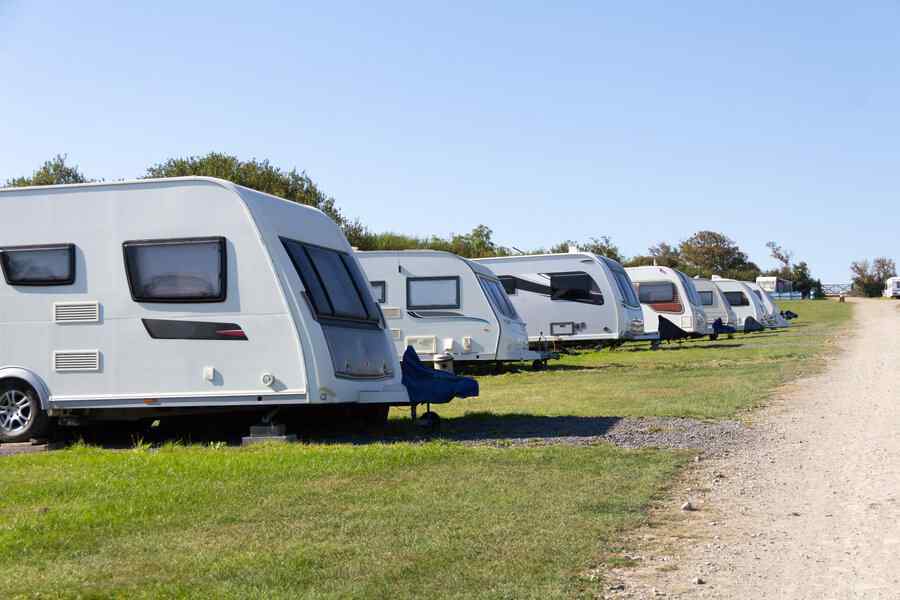
When the touring season ends, a couple of hours spent preparing your van can save you hundreds of pounds in spring. Frozen pipes, a flat leisure battery, damp and mould are the usual winter problems – and they are almost all avoidable. This guide explains how to winterise a caravan step by step, whether it is going into a storage compound, on your drive or staying ready for the odd winter trip.

Why winterising matters
Water left in a caravan’s pipes, pump, taps and water heater can freeze and expand, splitting fittings and cracking the heater tank. Batteries slowly discharge and can be damaged if left flat in the cold. Closed-up caravans also trap moisture, which leads to condensation, mould and musty soft furnishings. Winterising tackles all three.
Step 1: Clean inside and out
- Empty all food, drinks and toiletries. Anything left behind can freeze, leak or attract pests.
- Wipe down the fridge and freezer compartment, then leave the doors propped open (most fridges have a winter catch or vent position for this).
- Wash the outside and clear leaves and dirt from the roof, window seals and the gaps round the front panel. A clean van is easier to check over in spring.
- Check the seals while you clean. Any gaps or cracks are worth fixing before winter rain gets in.
Step 2: Drain the whole water system
This is the most important step. Every caravan is slightly different, so follow your handbook, but the usual process is:
- Turn off the water pump and disconnect the mains power.
- Open every tap, including the shower, and set mixer taps to the middle position so both hot and cold lines drain.
- Open the water heater’s drain valve – on many caravans this is a frost-protection or drain valve near the heater – and let it empty fully.
- Open the low-point drain taps under the caravan, if fitted.
- Remove and empty any inline water filter, and disconnect the inlet hose.
- Empty the fresh water container and waste container, rinse them and store them dry.
- Leave the taps and drain valves open over winter so any water that collects can escape.
Empty and rinse your Aquaroll and Wastemaster before storing them for the winter.
Step 3: Empty and clean the toilet
- Empty the toilet cassette at a proper disposal point, rinse it well and leave it to dry.
- Drain the flush tank if your toilet has one.
- Store the cassette with the blade slightly open, and treat the seal with a seal lubricant so it does not dry out and stick.
Step 4: Look after the leisure battery
A battery left flat over winter may not recover. Either remove it and store it somewhere dry and frost-free, or leave it connected to a suitable smart charger or solar maintainer if your storage allows. Charge it fully before storing and top it up every few weeks. Our caravan battery maintenance guide has more detail.
Step 5: Gas
- Turn off the gas at the cylinder and disconnect the regulator.
- Store gas cylinders upright, outside the caravan, in a secure, well-ventilated place – follow your gas supplier’s safety guidance.
Step 6: Keep moisture out
- Stand cushions and mattresses on their edges, or take them home, so air can circulate.
- Leave cupboard doors, lockers and the fridge slightly open.
- Do not block the fixed ventilation – it is there to prevent condensation.
- Use moisture traps or dehumidifier crystals, and empty them when you visit.
- Close the blinds to protect fabrics from sun fading, but leave the flyscreens in their normal position.
Step 7: Protect the tyres, brakes and chassis
- Inflate tyres to the correct pressure, and if you can, move the caravan a short distance every few weeks so the tyres do not sit on the same spot. Wheel stands or axle stands can take the weight off the tyres.
- Many owners store with the handbrake off and the wheels chocked, to stop the brake shoes sticking to the drums over a damp winter. Check the ground is level and secure first.
- Lightly grease exposed moving parts such as the corner steady threads and hitch, following the handbook.
Step 8: Security and insurance
Winter is a popular time for caravan theft because vans are left unattended for weeks. Fit a wheel clamp and hitch lock, keep any tracker subscription live and remove valuables. Check your insurance policy for storage conditions – some insurers require specific security devices or approved storage sites. Our caravan security tips cover the options.
Where to store your caravan over winter
- On your drive: convenient for checks, but check your deeds, any local covenants and your insurance first.
- A storage compound: many insurers look favourably on secure sites. CaSSOA (the Caravan Storage Site Owners’ Association) grades sites on their security, which can be a useful guide.
- Indoor storage: best protection from weather, usually at a higher cost.
Covers: yes or no?
A good-quality breathable cover can help keep a caravan cleaner and protect it from UV and green algae. A cheap non-breathable cover, or one that flaps in the wind, can trap moisture and scuff the paintwork. If you use one, make sure it is designed for caravans and fits snugly.
Checking on your caravan over winter
Try to visit every few weeks. Open it up on a dry day to air it, check for leaks or damp patches after heavy rain, empty moisture traps, check the battery and look at the tyres. Spotting a leak in December is far cheaper than discovering damp in April.
Getting ready for spring
Before your first trip, book an annual habitation service, check the tyres and their date codes, refit the battery and gas, and flush the water system with a caravan-safe cleaning product. If you are thinking about changing your caravan, spring is also a busy time for buyers – which is worth bearing in mind if you are planning to sell your caravan or part exchange it.
Caravan winterising FAQ
When should I winterise my caravan?
Before the first hard frost – in Yorkshire that usually means by late October or November. If you are not going to use the caravan again until spring, do it as soon as your last trip is over.
Do I need antifreeze in the water system?
Normally no. Draining the system completely and leaving the taps open is the usual method. Never put car antifreeze into a drinking water system. Follow your caravan manufacturer’s handbook.
Can I use my caravan in winter?
Yes. Many owners tour all year. If you do, keep the heating on a low setting to protect the water system, and drain down again before storing between trips.
Should I leave the handbrake on during storage?
Many owners leave it off with the wheels chocked to stop the brakes seizing, but only if the caravan is on level, secure ground. Check your handbook and your storage site’s rules.
Thinking about your next caravan?
Winter is a great time to browse without the summer rush. See our used caravans for sale or arrange a visit to Adwick Caravans at Toll Bar, Doncaster, South Yorkshire. Our team are happy to answer any questions about looking after your caravan – call us on 01302 872222.
Towing with a smaller car? Have a look at our used lightweight caravans for sale and our used caravans under 1200kg, and always check the weight plate against your car.
